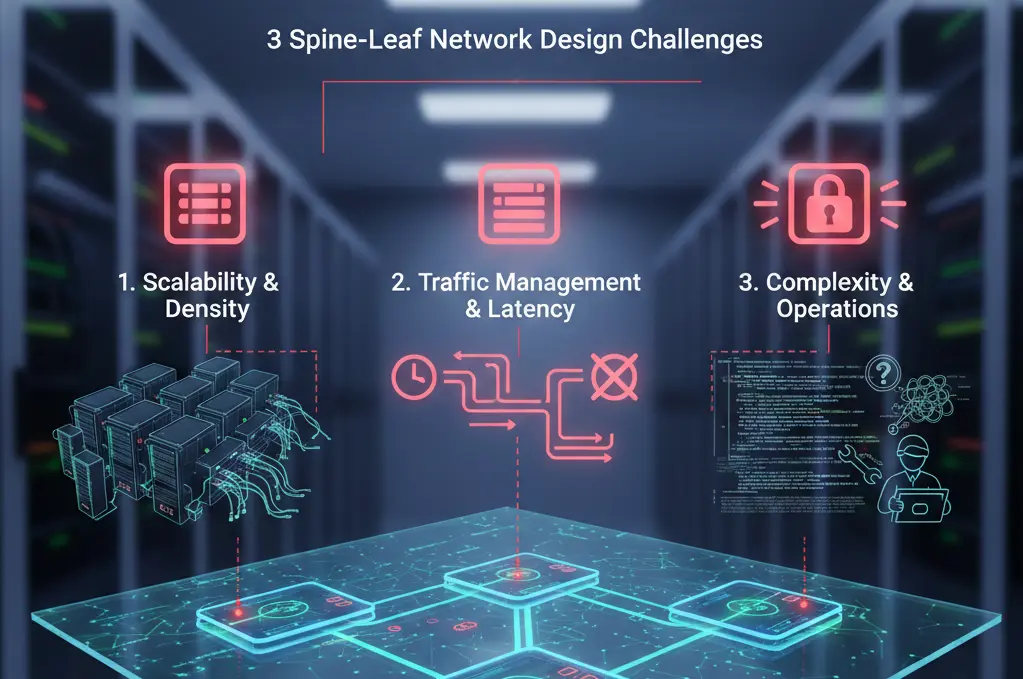
How 40G SR4 Supports High-Density Leaf-Spine Architectures
As modern data centers continue to scale, network architecture has shifted from traditional three-tier designs to Leaf-Spine topologies. This architecture provides predictable low latency, simplified scalability, and high-bandwidth east-west traffic handling. In these environments, 40G SR4 optical modules remain an important connectivity option, especially for short-reach, high-density deployments inside data centers.
Although higher-speed technologies such as 100G and 400G are becoming more common, 40G SR4 still offers a practical balance between cost, bandwidth, and deployment efficiency for many enterprise and cloud environments.
Why Leaf-Spine Architectures Need High-Speed Interconnects
In a Leaf-Spine network, every leaf switch connects to every spine switch. Unlike traditional north-south traffic patterns, modern applications generate massive east-west traffic between servers, storage systems, and virtualized workloads. Technologies such as virtualization, distributed storage, container platforms, and AI workloads have significantly increased internal traffic within the data center.
This architecture requires fast and consistent inter-switch connectivity. Since each leaf switch may connect to multiple spine switches simultaneously, the number of optical links grows rapidly as the network expands. High port density and reliable short-distance transmission therefore become critical factors.
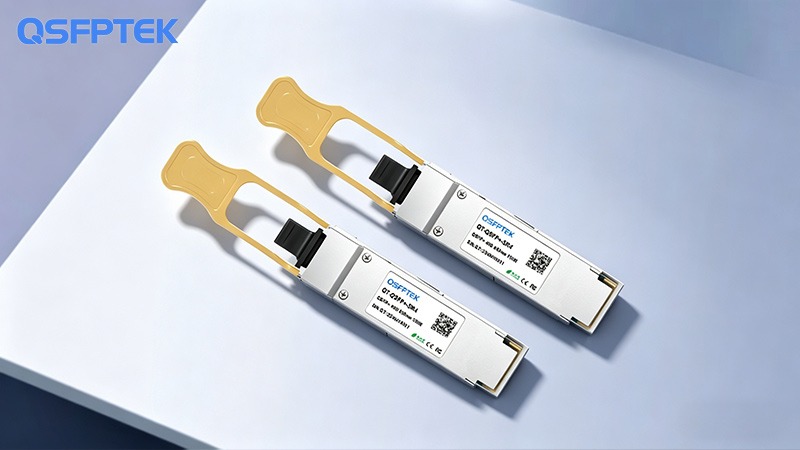
40G SR4 for High-Density Switch Connectivity
40G SR4 modules use QSFP+ form factors and parallel multimode fiber transmission. They typically operate over MPO/MTP fiber cabling and support transmission distances of up to 100 meters on OM3 fiber and 150 meters on OM4 fiber.
One of the key advantages of 40G SR4 in Leaf-Spine deployments is port density. QSFP+ interfaces allow network switches to support a large number of 40G connections within a compact 1U or 2U chassis. This makes it possible to build scalable Spine layers without consuming excessive rack space or power.
Compared with deploying multiple 10G links individually, 40G SR4 reduces cabling complexity while delivering higher aggregate bandwidth. For large-scale data centers where hundreds or even thousands of inter-switch links may exist, this simplification becomes extremely valuable for cable management and airflow optimization.
Supporting East-West Traffic Efficiently
East-west traffic dominates modern data center environments. Applications constantly exchange data between compute nodes, storage clusters, and virtualization platforms. In Leaf-Spine architectures, this traffic must pass through Spine switches with minimal congestion and latency.
QSFP+ SR4 modules help maintain high throughput between Leaf and Spine layers by providing dedicated 40Gbps connections across short distances inside the facility. Since most Spine switches are located within the same row or adjacent racks, the short-reach capability of SR4 optics is well suited for these deployments.
In addition, multimode fiber infrastructure helps reduce deployment costs compared with long-range single-mode solutions, especially for short inter-rack connections.
Flexible 4×10G Breakout Applications
Another important advantage of 40G SR4 modules is breakout capability. A single 40G QSFP+ port can be divided into four independent 10G connections using MPO-to-LC breakout cables.
This flexibility is particularly useful during network migration phases. Data centers can gradually transition from 10G server access to higher-speed aggregation without replacing all existing infrastructure immediately. Network administrators can connect legacy 10G devices to modern 40G Spine or Leaf switches while maintaining efficient bandwidth utilization.
Breakout configurations also improve switch port efficiency and simplify large-scale server connectivity.
Conclusion
Despite the industry’s movement toward higher Ethernet speeds, 40G SR4 continues to play a valuable role in modern high-density data center networks. Its combination of high port density, low-latency short-reach transmission, breakout flexibility, and cost-effective multimode cabling makes it highly suitable for Leaf-Spine architectures. For enterprises seeking scalable east-west traffic performance without the immediate cost of upgrading to 100G or 400G everywhere, 40G SR4 remains a reliable and practical solution for high-density interconnect environments.
Stay in touch to get more updates & news on The Wheonx!